AI for Bankers: Where to Start, and What to Never Do
A practical starting point for bank employees who want to learn AI and content creation: what to try this week, the one data rule you must never break, and what to check with your bank first.

Why learn AI at all?
Not because anyone can promise you a better job or more income. Nobody can. The honest reason is simpler: a lot of banking work is reading, writing, checking and explaining, and these are exactly the tasks AI tools are good at helping with.
In a poll in our community channel, 46 of the 74 people who voted said the thing they most want to learn right now is AI and content creation. The next most common answers were market-ready skills and building a personal brand. That tells us what bankers are really curious about: not magic, but useful skills they can practise on their own time.
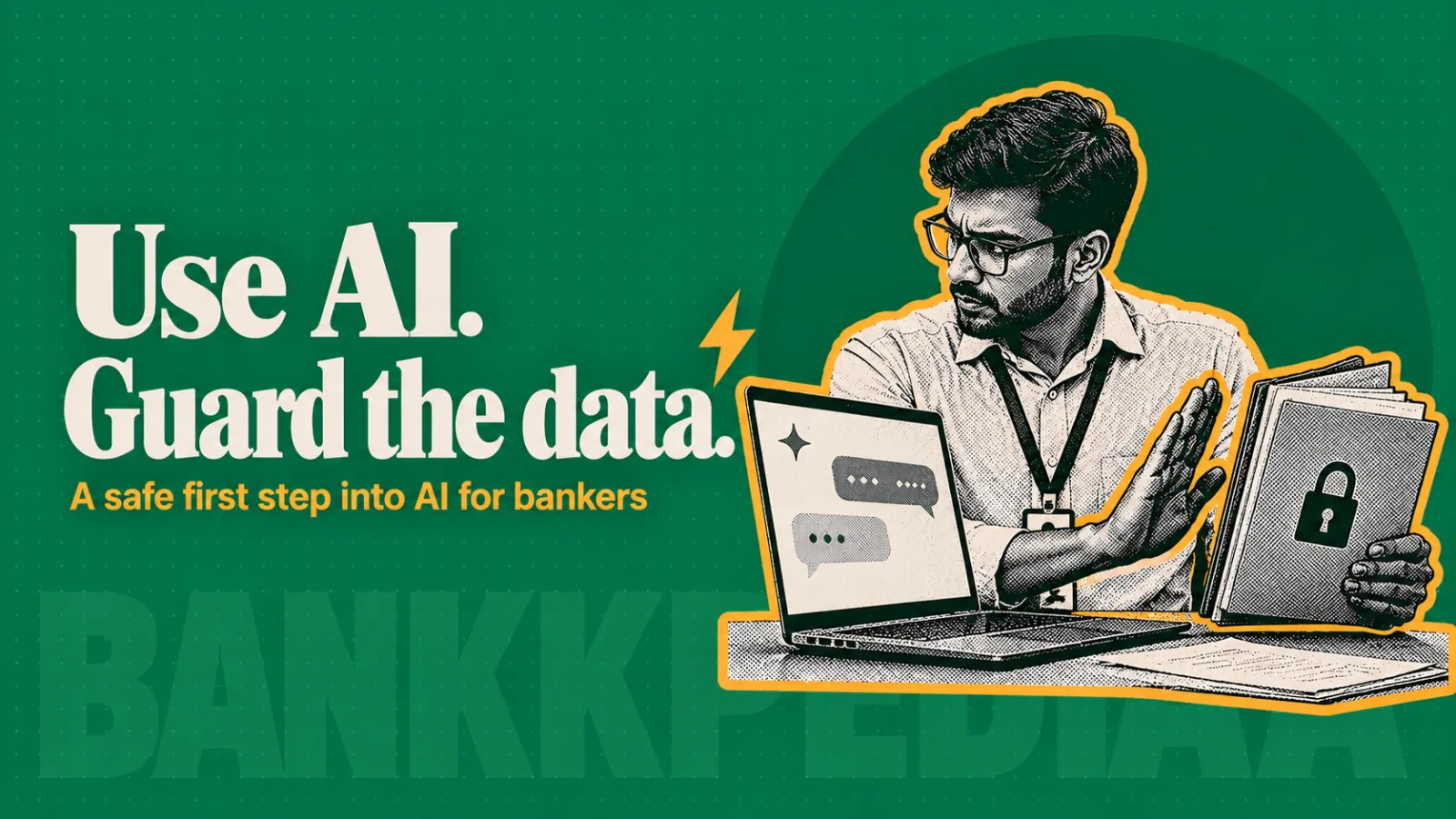
The one rule: never share customer or bank data
Before anything else, fix this rule in your head.
If you would not post it on a public noticeboard, do not paste it into an AI tool.
A simple test
That means no customer names, account numbers, loan details, internal circulars marked confidential, screenshots of internal systems, or anything you were given because of your job. Free AI tools are run by companies outside your bank. Unless your bank has formally approved a specific tool and told you how to use it, assume that anything you type may be stored or reviewed.
Practise with public or made-up information only: a published RBI circular, a news article, a textbook chapter, or an example you invent yourself.
Check your bank’s rules first
Many banks have staff conduct rules about outside business or paid work, about speaking publicly, and about social media. The details differ from bank to bank, so we will not guess at yours. What we can say is simple:
Find your bank’s code of conduct or staff rules and read the sections on outside activities and public statements.
If something is unclear, ask HR or compliance before you start, and keep their answer in writing.
If you do create content, keep it about general topics and your own learning. Do not criticise your employer, discuss internal matters or share anything from inside the bank.
This is not legal advice. It is a habit that protects your career.
Five safe things to try this week
You do not need to code. You need a free account on a mainstream AI assistant and thirty minutes.
Summarise a public document. Take a published RBI circular or a long news article and ask for a five-point summary. Then read the original and check what the summary got wrong. This teaches you to trust, but verify.
Explain a concept to yourself. Ask for a topic you want to revise, such as how repo rate changes affect loan EMIs, in simple words with an example. Then ask for three practice questions.
Draft and improve an email or an application. Use an invented situation. Compare the AI draft with your own, and keep what is better.
Learn a spreadsheet formula. Describe what you want a sheet to do and ask for the formula and an explanation of how it works.
Turn your own notes into a study plan. If you are preparing for an exam, paste your own notes (not bank material) and ask for a four-week schedule.
Always read the result critically. AI tools can sound confident and still be wrong, which matters even more in a field like banking.
Written by